Why Practical Neuro-Affirming Resources Are Still So Hard to Find
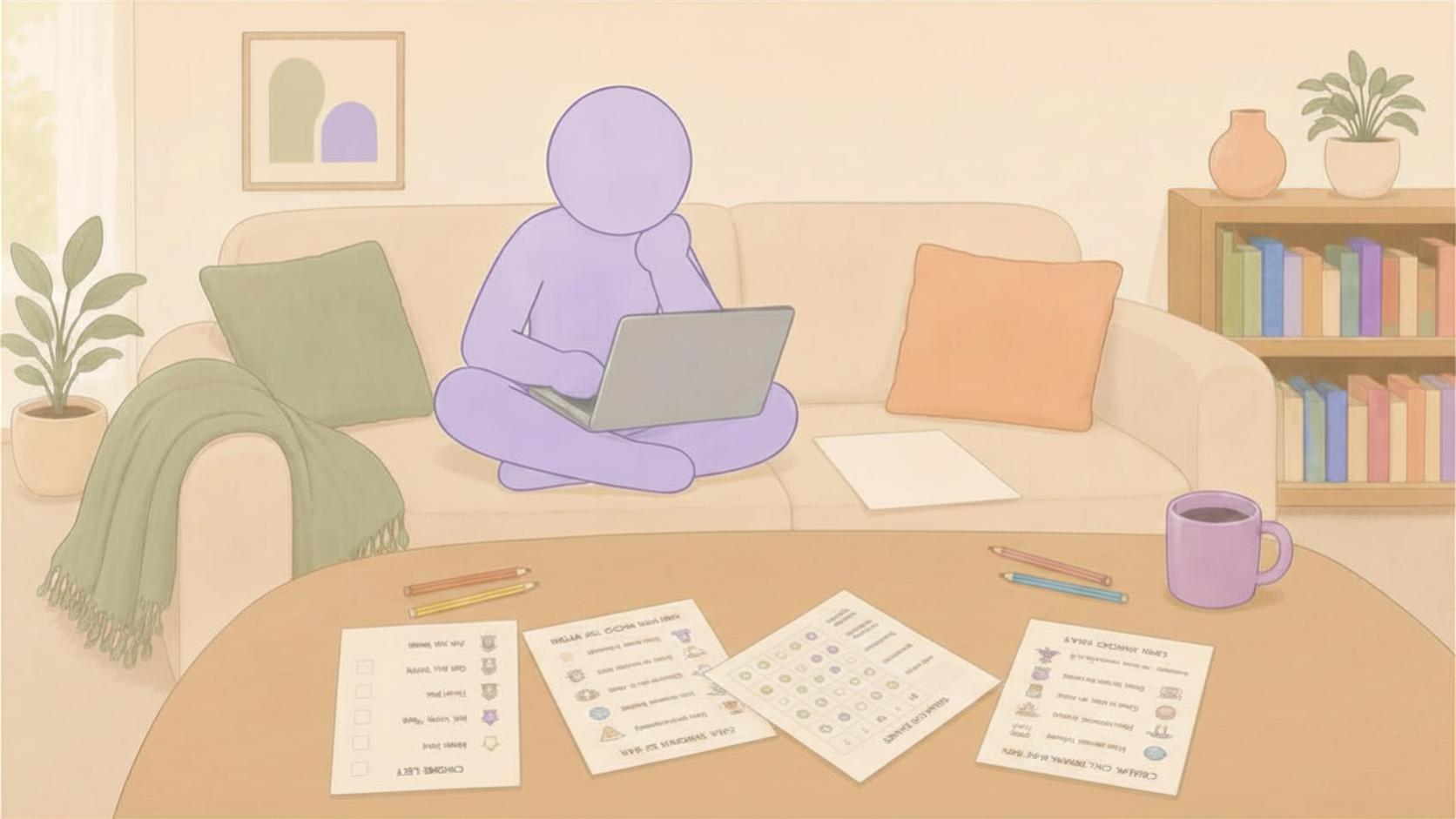
Person working on a laptop at home with worksheets scattered around

A teacher sits down on Sunday night to plan for an autistic student who has been struggling. She already understands that behavior is communication. She knows regulation comes before reasoning. She has moved away from reward charts and consequences and is trying to build support around safety, relationship, and autonomy. Then she opens her laptop … Read more
Intense Enthusiasms: What Happens When We Stop Trying to Shrink Them

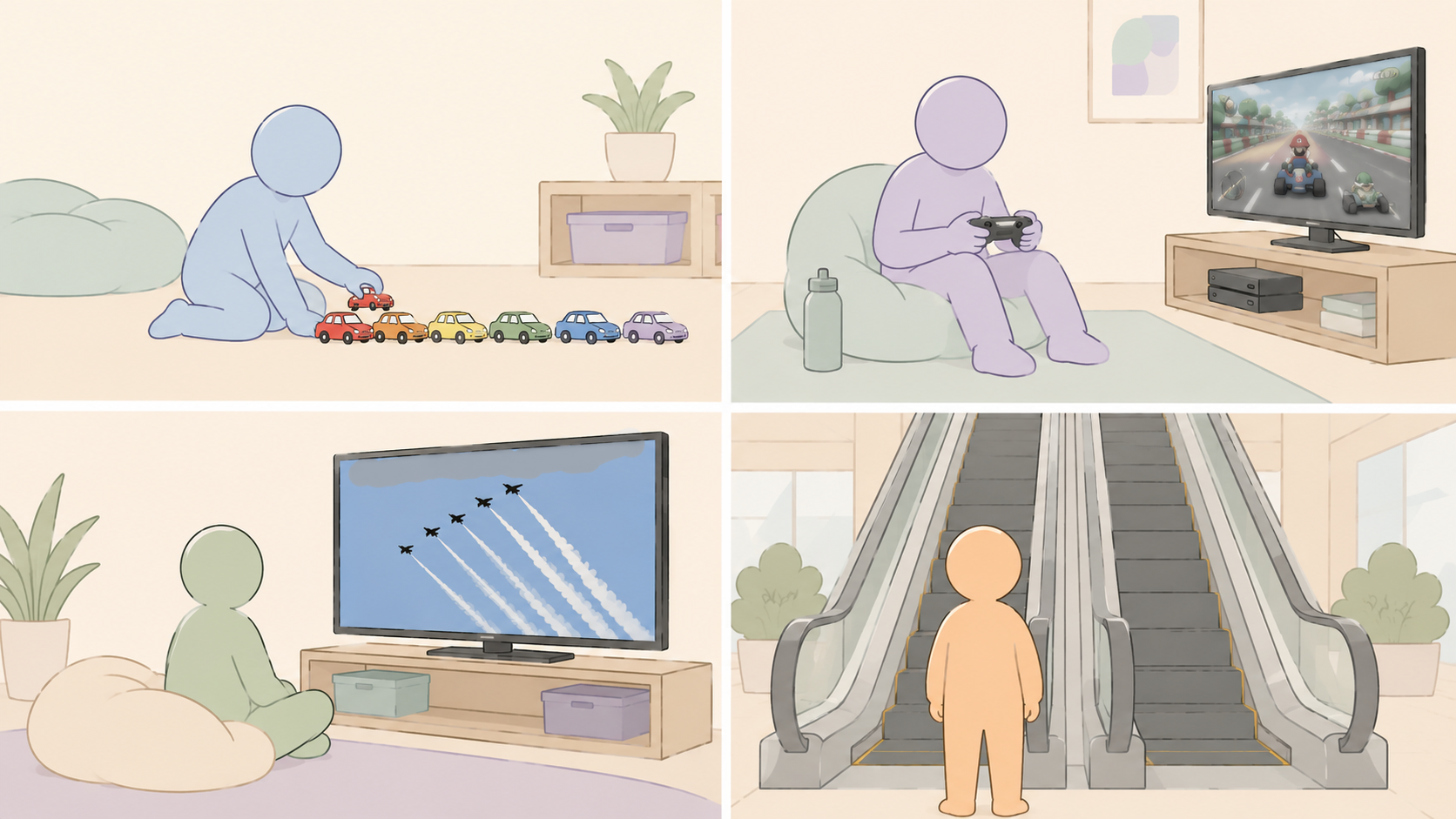
Four-panel illustration of figures absorbed in an intense enthusiasm: a blue figure lining up toy cars by color, a purple figure playing a kart-racing video game, a green figure watching jets in formation on TV, and an orange figure standing before an escalator.

A child returns to the same three songs. Talks about trains through every conversation. Memorizes television episodes, studies maps, focuses on video games, sorts figures, or watches the same short video again and again. Adults often notice the repetition first. We may worry that the interest is taking up too much space. We may try … Read more

Why SSS Is Built the Way It Is

Soft pastel illustration of a larger lavender adult figure and a smaller peach child figure sitting face-to-face on a rug in a cozy room, calmly building together with small interlocking toy bricks. Cushions, plants, a window, books, and warm light create a peaceful, connected home setting.

A look at the framework behind Shared Stories Studio — and why every design choice is intentional. When I started building Shared Stories Studio, I wasn’t trying to create a new kind of resource just to be different. I was trying to solve a real problem: autistic learners and AAC users were being handed tools … Read more