
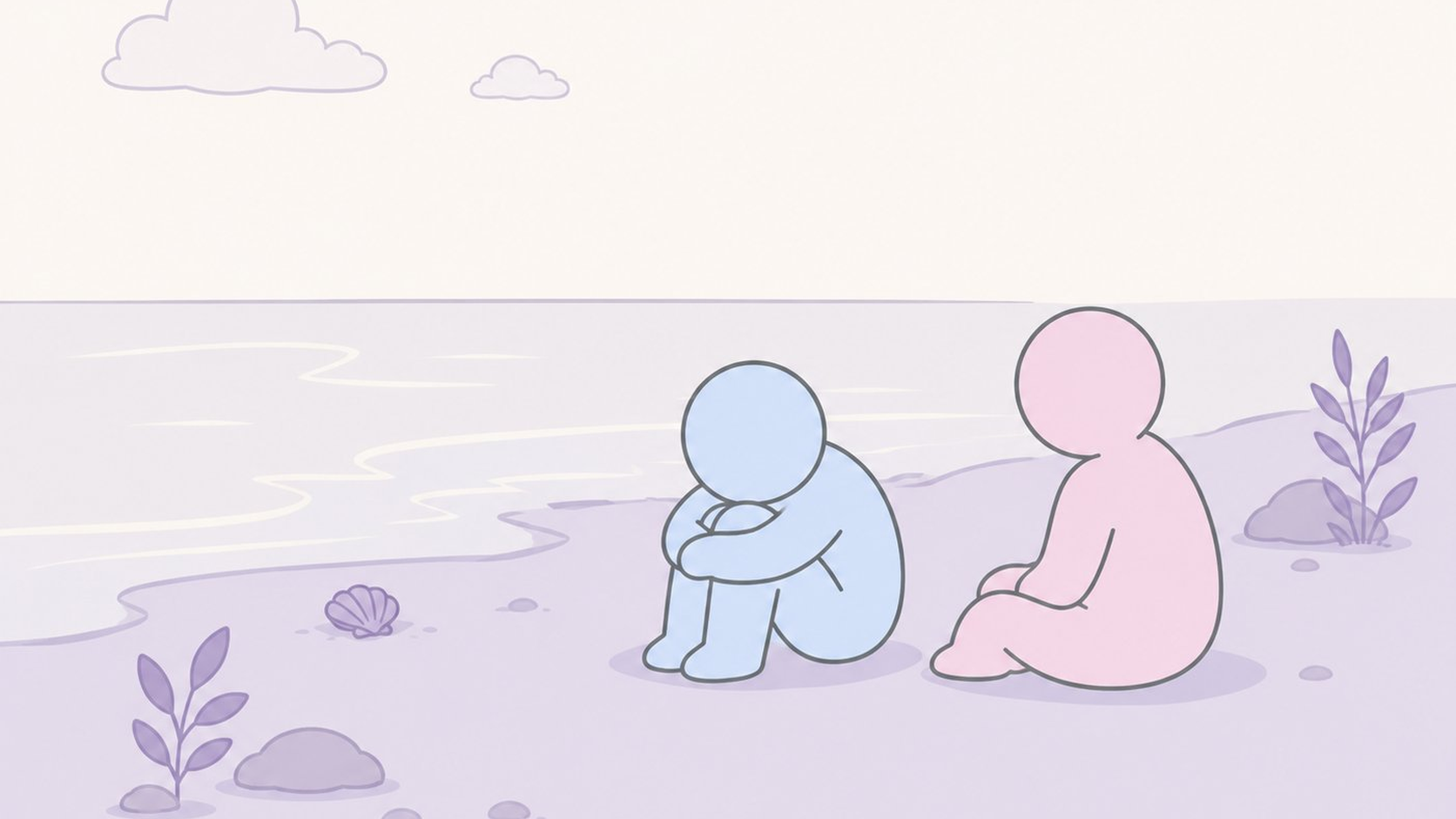
When I was a little girl, my cousins and I would sleep over at my step-grandmother’s house. She made promises. We would go to a movie, maybe, or have pizza for dinner.
I could never ask her whether those things were still going to happen.
More often than not, they didn’t. She forgot, or her attention went somewhere else, and the evening went on without the movie or the pizza.
Those were the nights I got a stomachache and said I wanted to go home.
The body said it first
I didn’t say I was disappointed. I said my stomach hurt.
For many autistic and neurodivergent learners, a changed plan is a body event before it is a conversation. A child may say their tummy hurts, ask to leave, go quiet, or need the bathroom over and over. Adults respond, reasonably, to what the child says. They check the stomach, offer a snack, call for an early pickup.
All of that answers the stomach. None of it reaches the promise.
When the adult is the source
We tend to picture disappointment arriving from outside: rain, a cancellation, a sold-out show. Often the adult is the one who forgot, said no, or carried the news. That is hard to sit with. It brings guilt, defensiveness, and the urge to explain or to offer something else right away. Each of those puts the adult’s feelings at the center of the moment.
What helps is usually smaller.
Instead of “I’m sorry, I’ve been so busy today,” try “I said we’d have pizza, and we didn’t. That’s disappointing.”
Instead of “We’ll go to a movie next weekend instead,” try “You were looking forward to that.” Then wait.
A child who can’t ask is left tracking the promise alone. Adults can take that job back. Say what’s happening before the child has to wonder: “I said we’d go to a movie. I forgot, and now it’s too late tonight.” And make the question available ahead of time, on a communication system or a choice board or in shared words: Is it still happening? You said. I was waiting for that.
When two children want different things
Some disappointment is built into the situation. One child wants the park and the other wants the library. One wants pizza and the other wants tacos. Whatever the adult decides, someone is going to be disappointed.
The adult’s job isn’t to find the answer that disappoints no one. Sometimes there isn’t one. The job is to make the decision visible, own it, and leave room for the child it lands on.
- Own the decision. “I picked the park today” keeps the decision with the adult. “Your brother wanted the park” hands it to a sibling, and now the disappointment has someone to land on.
- Name it for the child who didn’t get their choice. “You wanted the library. Today is a park day. That’s disappointing.”
- Wait before asking for a good sport. A child can go along with the plan and still be disappointed. Being asked to look happy about it is a second demand on top of the first.
- Make turns visible. A written or picture list of whose choice comes next lets a child see that their turn exists, without having to ask or keep track of it alone.
- Notice who always gives way. In many families, the same child is the one asked to be flexible. Sometimes that’s the autistic sibling, and sometimes it’s the sibling who isn’t. Disappointment that is always one child’s job adds up.
When the children can negotiate, let them, with an adult close by. When they can’t yet, the adult holds the decision so neither child has to carry it.
This weekend is Halloween, and plenty of plans will change: a costume that doesn’t feel right, a party that gets canceled, siblings who want different streets. The disappointment will be real, and it may show up first as a stomachache.
Understanding Disappointment, at three levels
The adult pages in the Understanding Disappointment visual supports name what most resources leave out: with disappointment, the adult is frequently its source, the person who canceled, said no, or carried the news. They are specific about what to do instead of justifying or rushing to a replacement.
- Level A, Supported Explorers: where disappointment lives in the body, what it looks like from the inside and the outside, naming the feeling in the learner’s own words, and that a body may need time.
- Level B, Meaning Makers: feelings shift, how disappointment shows up in body and thought together, a menu of supports, and metaphor language for a feeling that is hard to name.
- Level C, Reflective Self-Advocates: the gap between what was expected and what happened, why disappointment fades unevenly rather than switching off, and what the learner wants others to know.
All three include a Vocabulary Snapshot of Core, Concept, and Topic words, so AAC users can find the same language on their own systems. The Understanding Disappointment bundle includes all three levels.
This weekend, if a plan changes, say so before the child has to ask.