
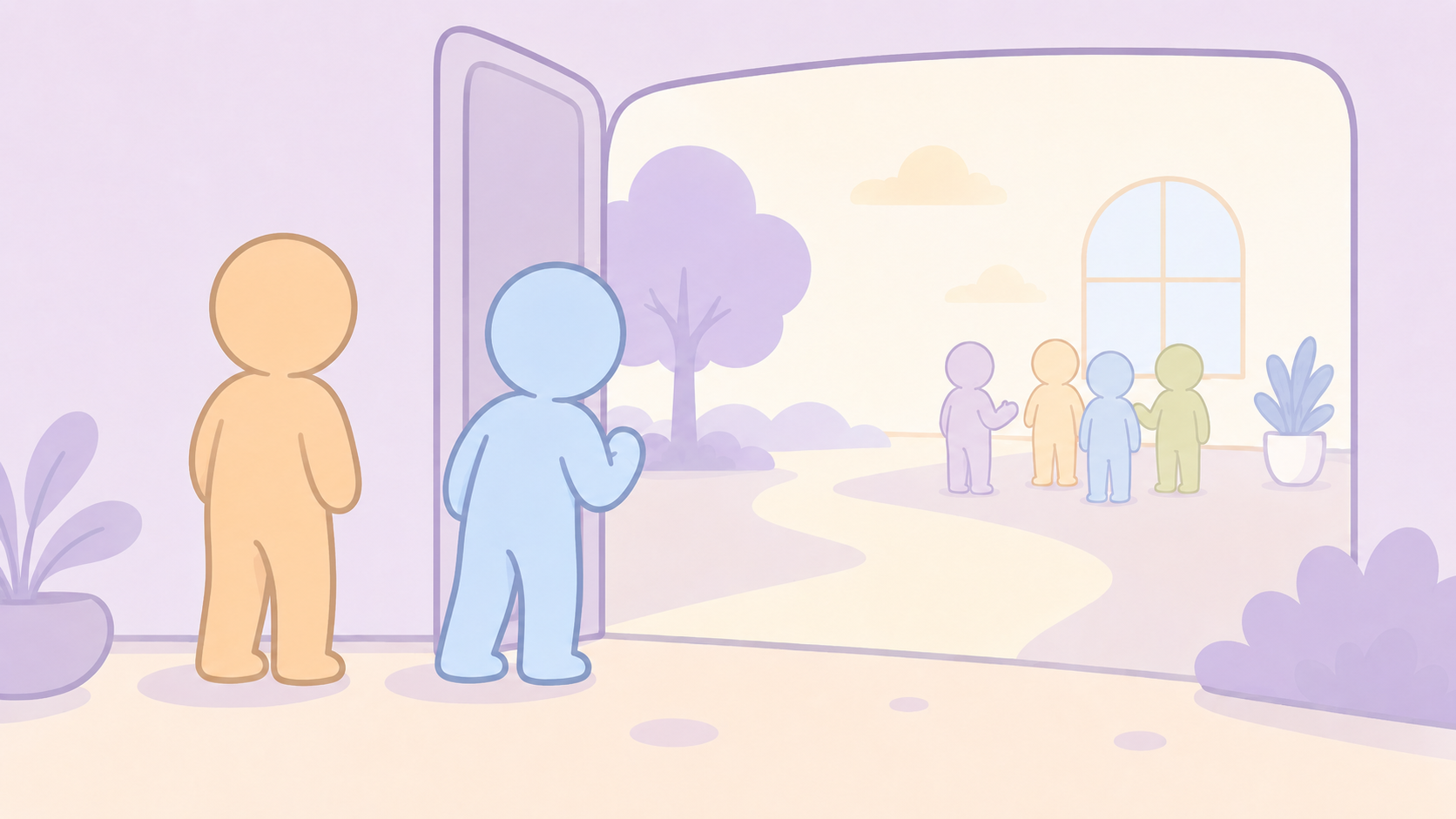
New environments are part of everyday life. A visit to a relative’s house. A community event. A new playground. A family trip. A different store. Even a place we’ve never been before can bring new sights, sounds, smells, and routines.
For many autistic learners, navigating a new environment is significantly more than a change of location.
This isn’t a behavior problem. It’s a regulation problem. And once we understand it that way, the support looks very different.
For autistic learners, that adjustment often requires significantly more nervous system work. The sights, sounds, smells, expectations, and uncertainty of a new environment can create a level of cognitive and sensory load that others may not immediately see.
Why New Environments Are Hard
Autistic nervous systems are often working harder than we realize to process sensory input, predict what comes next, and stay regulated. Familiar environments help — the sameness of them offloads some of that work.
A learner who navigates their school hallways with ease may struggle in a hotel lobby, a crowded family gathering, or a new community event. Not because they’ve “regressed,” but because the environment is louder, brighter, less predictable, and filled with unfamiliar information.
Add travel itself — disrupted sleep, different food, a long car ride, a plane trip, or changes in routine — and you’ve layered additional stress onto a system that’s already working overtime.
New environments also remove the predictability that helps many autistic learners feel organized. The nervous system is not only processing new sensory information — it is also trying to answer dozens of unanswered questions.
Where do I go? What happens next? How long will this last? Who can help me?
When those questions remain unanswered, uncertainty itself can become activating.
Understanding anxiety in autistic learners means recognizing that unfamiliar environments are often a primary trigger, not a secondary concern. The nervous system is doing exactly what it’s supposed to do: sounding the alarm when things don’t match expectations.
Looking for a ready-to-use support for anxiety, uncertainty, and body signals in new environments?
If changed plans, canceled activities, or unmet expectations are part of the picture, the Understanding Disappointment Resources may also be helpful.
Familiar Doesn’t Mean Easy. Unfamiliar Doesn’t Mean Failure.
Sometimes adults are surprised when a learner struggles in a place that seems enjoyable or exciting.
A child may love the beach and still find a beach vacation exhausting. They may look forward to visiting family and still need extra support once they arrive.
Difficulty in a new environment is not evidence that something went wrong. It is information about the amount of regulation work the learner’s nervous system is doing behind the scenes.
Support isn’t about making every place feel familiar. It’s about helping a learner build enough safety, predictability, and connection to explore something new.
What Regulation-First Support Looks Like
When a learner is struggling in a new environment, the goal isn’t to push through it or redirect away from it.
The goal is to support regulation first, so learning, participation, and connection become possible.
Preview and Predict
Before arriving somewhere new, describe what it will look, sound, and feel like. Use photos if you have them. Talk through the sequence of what will happen — not as a script to follow perfectly, but as a map that reduces uncertainty. For AAC users, building vocabulary around the experience ahead of time means they have language available when they need it most.
Bring the Familiar
A preferred object, a consistent sensory item, a familiar snack, or a favorite routine from home are not indulgences. They’re anchors. Familiar objects, routines, and sensory supports reduce the amount of new information a nervous system has to process. They create small pockets of predictability inside an unfamiliar environment.
Lower the Demand
When a learner is already managing the cognitive and sensory load of a new environment, adding expectations on top compounds the challenge. This is often a good time to reduce demands, not increase them. Ask yourself: what’s the minimum that needs to happen right now? Start there.
Name the Experience Without Minimizing It
“This place is really loud.” “There’s a lot happening here.” “This is different from what we expected.”
Statements like these land differently than “you’ll get used to it,” “it’s not that bad,” or “just ignore it.”
Acknowledgment is co-regulation. It tells the learner that their experience makes sense and that you’re with them in it.
Plan for Recovery
Build in quiet time. Know in advance where the lower-stimulation spaces are. If a learner needs to step away, that’s not a failure — it’s a strategy. Whenever possible, avoid scheduling every minute of a trip or outing. Regulation often benefits from space between activities rather than moving directly from one new experience to the next.
For AAC Users Specifically
New environments bring a communication challenge on top of an already demanding situation. AAC devices need to go everywhere — and so does vocabulary for what the learner might experience and want to say.
Before a trip, outing, or event, spend a few minutes exploring language that may become important. This might include sensory experiences (“too loud,” “too bright,” “I need a break,” “I don’t like this”), preferences and choices (“I want to leave,” “I want to stay,” “not yet,” “I’m done”), names of people and places connected to the experience, and body states (“I’m tired,” “I’m overwhelmed,” “my stomach hurts,” “I need quiet”).
Core vocabulary is always available, but new environments often introduce unfamiliar people, places, experiences, and body sensations. Planning ahead can make those words easier to access when a learner’s nervous system is already working hard.
This Is Where Shared Supports Come In
New environments often reveal anxiety that was already building beneath the surface. That anxiety doesn’t always look like worry. It can look like shutting down, refusing to move, becoming quiet, melting down, or escalating in ways that feel unpredictable.
Having shared language — that help name the internal experience — gives learners and the adults supporting them a way to make sense of what’s happening.
Our Understanding Anxiety series are designed for exactly these moments. It uses regulation-first, co-created language to help learners recognize what anxiety feels like in their body and begin building a shared understanding of what support might help. Available in all three levels — from sensory-supported co-reading (Level A) to learner-led reflection and self-advocacy (Level C).
New environments also often bring unexpected changes in plan. If disappointment is part of the picture, our Understanding Disappointment story pairs well with this one.
If you’re heading into summer with an autistic learner on your caseload — or in your family — it may be helpful to build that shared language before the next new environment arrives.
Looking for a ready-to-use support for anxiety, uncertainty, and body signals in new environments?
If changed plans, canceled activities, or unmet expectations are part of the picture, the Understanding Disappointment Resources may also be helpful.
Get the Free Guide and Notes from the Studio
You’ll receive the free guide first, followed by occasional practical notes on regulation-first, neurodiversity-affirming support.