
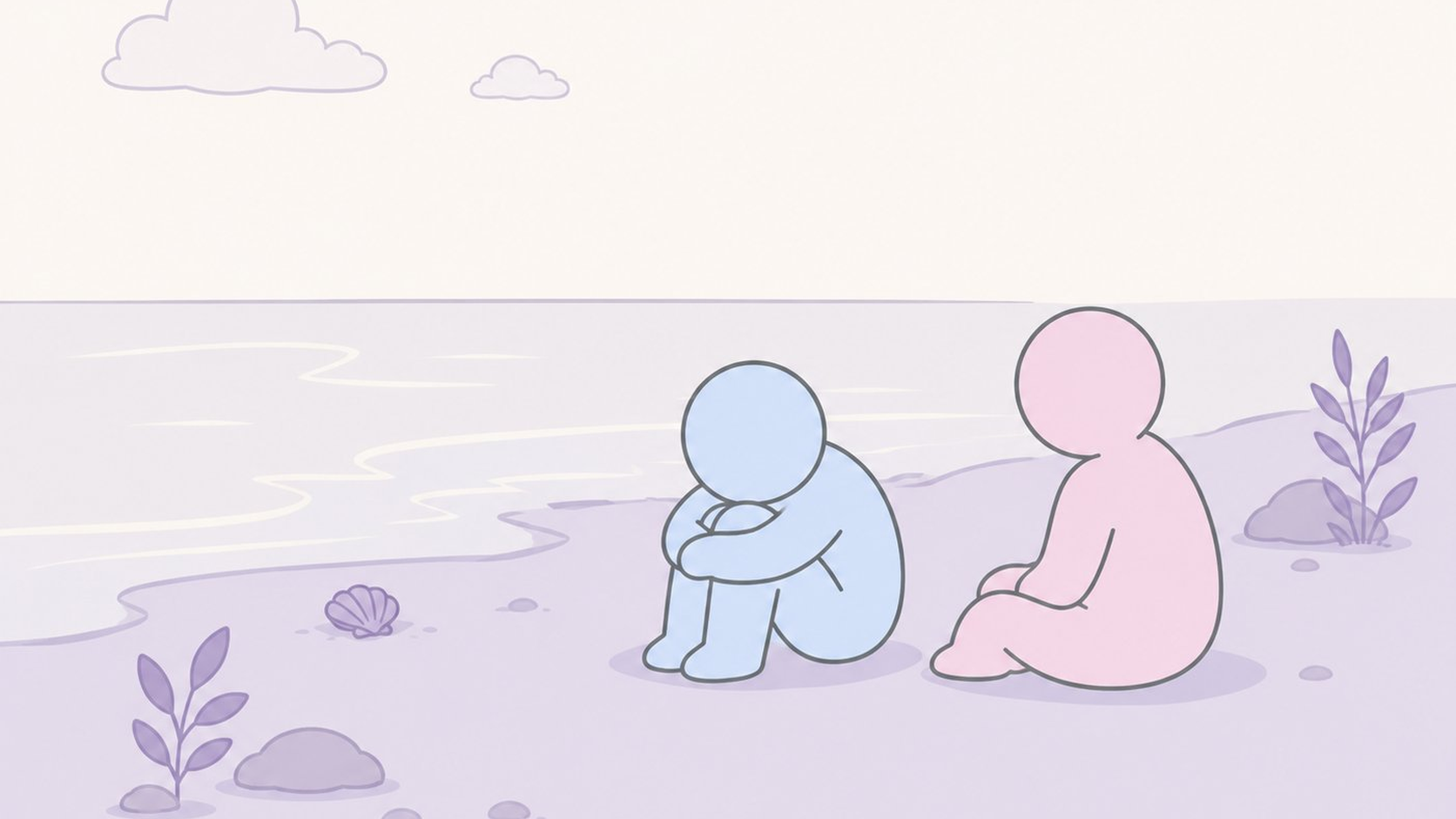
Sometimes disappointment doesn’t look sad.
Sometimes it looks like:
- screaming because the blue cup is dirty
- refusing to get in the car after soccer was canceled
- crying over the wrong snack
- going completely silent after a small change in plans
- slamming a door after losing a game
- melting down over something adults think should be “no big deal”
And sometimes the child looks just as surprised by the reaction as everyone else.
The behavior is visible. What the body is carrying usually isn’t.
Adults often see the outside of disappointment: the yelling, the refusal, the tears, the shutdown, the anger.
But many neurodivergent children are also having a body reaction underneath it all.
All children can have strong body reactions to disappointment.
But for many neurodivergent children, those reactions may happen faster, feel bigger, last longer, or require more support to move through.
Because disappointment is not just an emotional experience.
It can also be a nervous system experience.
Sometimes the body reacts before the child even has words for what happened.
“But It Was Such a Small Thing…”
This is one of the hardest parts for adults.
The thing that caused the disappointment can look so small from the outside:
- a canceled plan
- the broken cracker
- the different teacher
- the game ending
- the answer being “not today”
And yet the reaction can feel enormous.
A child can know something is “not a big deal” and still have a very big body reaction to it.
Because disappointment is not always about the event itself.
Sometimes it is about the sudden shift.
The nervous system was expecting one thing.
Then suddenly, the world changed.
For some children, that shift lands fast and hard inside the body.
What Disappointment Can Feel Like Inside
Most adults can probably remember a disappointment that felt physically big:
the sinking stomach, the tight chest, the urge to cry, yell, leave, or shut down.
Children experience those body reactions too.
For many neurodivergent children, the nervous system response can simply become more intense, more visible, or harder to reorganize once activated.
Some children describe disappointment as heavy, tight, hot, jumpy, restless, shaky, hollow, stuck, or simply too big.
Some children become louder and more physical.
Some become quiet and disappear into themselves.
Some pace.
Some freeze.
Some argue.
Some collapse.
Some suddenly need space.
Some suddenly need connection.
Different nervous systems react differently.
And sometimes disappointment is not just disappointment.
Sometimes it arrives carrying stress, fatigue, sensory overload, uncertainty, weeks of holding it together, or the effort of being flexible all day long.
Then one small disappointment becomes the moment the body finally says:
I can’t hold all of this anymore.
What Adults Often Misread
When children become highly activated, adults sometimes assume:
- “They’re overreacting.”
- “They just want control.”
- “They need to learn to cope.”
- “They’re doing this for attention.”
But many children are not trying to control other people in these moments.
They are trying to regain organization inside their own body.
That does not mean boundaries disappear.
It does not mean adults must “give in.”
But it does change how we understand what we are seeing.
A dysregulated nervous system cannot easily access flexibility, reasoning, or problem-solving.
Not because the child is refusing.
Because the body is busy trying to feel safe and organized again.
What Actually Helps
Usually not lectures.
Not:
- “calm down”
- “it’s not a big deal”
- “you need to be flexible”
And usually not long explanations in the middle of the storm.
What often helps first is regulation:
- slowing things down
- reducing demands
- offering presence without pressure
- allowing movement
- staying nearby
- helping the child feel less alone inside the experience
Sometimes the most supportive thing an adult can communicate is:
“I believe your body is having a hard time right now.”
Not:
“You’re making this hard.”
That shift matters.
Because children often develop understanding after the nervous system settles — not while it is overwhelmed.
Before the Hard Moment
One of the most powerful things we can do is talk about disappointment during calm moments.
Not as a lesson.
Not as a warning.
Not as behavior correction.
But as shared understanding.
Children benefit from hearing:
- disappointment happens to everyone
- bodies can react strongly to disappointment
- different people react differently
- feelings change over time
- support is allowed
- activation is not failure
And maybe most importantly:
They are not bad for having a hard moment when something important to them suddenly changes.
Sometimes disappointment is not “poor coping.”
Sometimes it is a nervous system struggling to reorganize after an unexpected shift.
That shift — from “what is wrong with this child” to “what is this child’s body carrying” — is often where real support begins.
The Understanding Disappointment series
This is what we built the Understanding Disappointment series around — not managing the emotion, but understanding it. Three leveled visual supports (A, B, and C) that help children and the adults who support them build shared language for what disappointment is, how it moves through the body, and what might help while it’s still here.
Level A builds foundational body awareness — noticing the signals without expectation.
Level B introduces pattern recognition — this is what happens when something matters to me.
Level C goes deeper — predictive processing, affect labeling, advocacy, and the two-maps metaphor for understanding the gap between expectation and outcome.
All three levels are now available in the Shared Stories Studio shop. If you’re supporting a child who carries disappointment heavily — or quietly, or for longer than adults expect — I hope this gives you something to reach for together.