
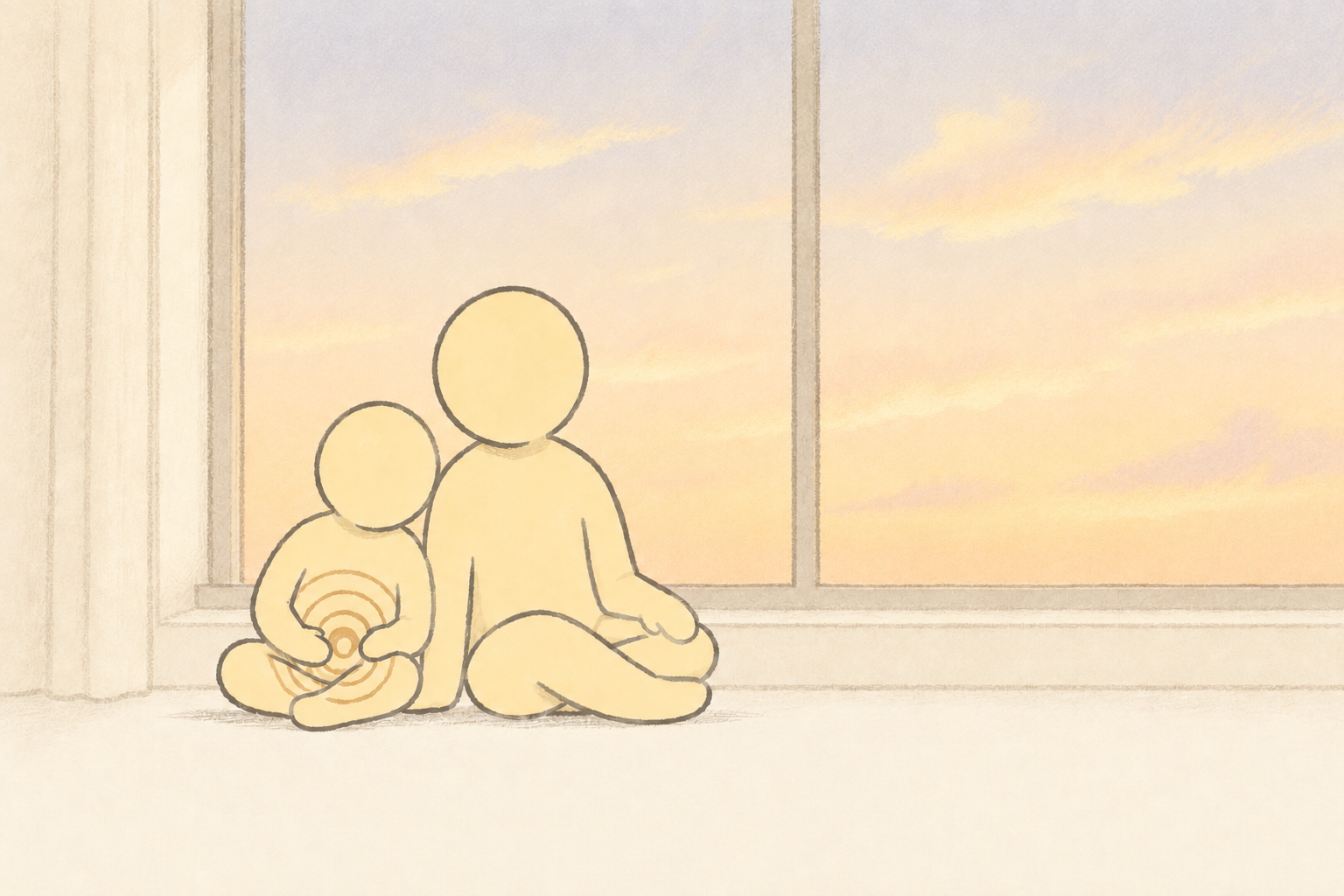
Why constipation in neurodivergent kids is so often misread — and what their bodies actually need
Some of the most chronic, exhausting, quietly distressing experiences in a neurodivergent child’s life happen in the bathroom — or don’t happen there, and that’s the problem.
Constipation, withholding, irregular patterns, sensory distress around toileting — these are everywhere in neurodivergent families. They are also almost never talked about in the way they need to be. The conversation tends to land in one of two places: a medical office, where the focus is fiber and fluids and stool softeners, or a behavior framework, where the focus is compliance — getting the child onto the toilet, getting the child to stay there, getting the child to try.
Both of those have their place. Neither addresses the thing the child is actually missing, which is language for what their body is doing.
If you support neurodivergent learners — as a parent, an educator, an SLP, an OT, a clinician — you have almost certainly met a child who is quietly cataloging body signals they cannot yet name, and quietly bracing against a process that, for them, has come to feel like a threat.
“Just go” doesn’t work — and it isn’t supposed to
When a child has been struggling with pooping for weeks, months, sometimes years, the instinct from the adult world is to push harder. Sit longer. Drink more water. Stop holding it. The framing slips in subtly: they’re holding it. They’re being stubborn. They don’t want to go.
That framing is doing real harm.
When pooping is hard, it is happening in the body. The digestive system may be slow. The pelvic floor may be guarded. The interoceptive signal — that internal sense of my body needs to go — may be muffled, confusing, or arriving too late. The nervous system, after enough hard moments, has learned that the bathroom is not a safe place to release. None of this is willful.
For a child with a PDA profile in particular, try harder is often the worst thing we can ask. The demand itself triggers the nervous system to brace. Bracing increases muscle tension. Muscle tension makes release physically harder. The very act of being told to go can be the thing that makes going impossible.
This isn’t defiance. It isn’t a behavior to manage. It is a body doing exactly what it has learned to do.
Why body-first language matters
For a neurodivergent kid who is struggling with pooping, the most important moment is rarely the moment in the bathroom. By then, the body is already in distress, the demand is already in the air, and language is the last thing anyone has bandwidth for.
The work — the work that actually changes things over time — happens upstream. In quiet moments. When there’s no urgency. When there’s space to notice.
What does noticing look like? Naming small things in the body, without pressure:
- My body feels full.
- My body feels tight.
- My body feels uncomfortable.
- My body feels tired.
These are not problems to solve. They are information. They are the building blocks of a vocabulary the child can return to weeks later, months later, in their own time, in their own way.
For a long time, the dominant approach to toileting struggles in neurodivergent children has been teach the routine, reward the behavior, expect the outcome. That sequence asks the body to perform before the child has language for what their body is doing. It often backfires — and even when it appears to work in the short term, it leaves the child without the one thing they will most need as they grow: the ability to recognize what their body is telling them.
Understanding first. Patterns second. Communication third.
A different sequence: build understanding before you build skills.
Help the child notice that their body makes poop. That all bodies do. That bodies work in different ways — some every day, some every few days, some without a pattern. That bodies send signals, and that signals are information, not commands.
Then, over time, help them notice patterns. Maybe pooping is easier at home and harder at school. Maybe easier on calm days and harder on rushed ones. Maybe easier in a familiar bathroom than a new one. Patterns are not predictions. They are clues. And they belong to the child.
And finally — only finally — the question of communication. If the child wants to. When the child is ready. Pooping is a private topic. Not sharing is as valid a communication as sharing.
Self-advocacy here doesn’t come from a worksheet or a chart. It grows out of self-recognition. A child who can say my belly feels full is a child who can begin to ask for what they need. A child who has only ever been told just go has nowhere to start.
What this looks like in practice
A few small shifts that tend to make a real difference:
- Drop “try harder” from your vocabulary, even silently. The body hears it. So does the relationship.
- Talk about bodies on calm days. Not at the bathroom door. Not in the middle of a hard moment. In the car, on a walk, before bed, in passing. Some bodies poop every day. Some bodies poop every few days. Some bodies have no pattern yet.
- Lower the demand temperature in the bathroom. Quiet, privacy, time, a familiar position, a warm bath, the absence of someone watching the door. These are not luxuries. They are the basic conditions under which the body’s natural processes are able to work.
- Name what you see, gently. I noticed your belly looked tight today. Naming, without fixing, is a powerful intervention.
- Respect the choice not to share. Pooping is a private topic for most people. The child gets to decide when, how, and with whom they share what they notice.
- Stay in the relationship, not the outcome. Pooping will come and go. The relationship is the steadier thing.
A different question to ask
If you’re supporting a neurodivergent learner whose pooping has been hard — for weeks, for months, for as long as you can remember — it can help to stop asking, how do I get them to go? and start asking, what is their body telling me right now, and what would help it feel a little safer?
That question doesn’t solve everything. But it changes what we look for, what we offer, and what we measure as progress. And for a child whose body has been bracing for a very long time, having even one adult who looks at them through that lens — who treats their body as a body, not a behavior — can be the beginning of something new.
So here’s a question worth sitting with, whether you’re a parent, an educator, a clinician, or all three at once:
When pooping has been hard for the child you’re thinking of right now — what would change if we started by helping their body feel a little safer, instead of asking it to perform?
Explore the Constipation Series
My Shared Stories Studio Constipation series includes neurodiversity-affirming shared narratives designed to be co-created and support body awareness, regulation, and shared understanding at home and at school.
- Level A – Supported Explorers – When Pooping Is Hard
- Level B – Meaning Makers – When Pooping Is Hard
- Level C – Reflective Self-Advocates – When Pooping Is Hard
- Bundle – All Levels – When Pooping Is Hard
Categories: Body Awareness