One Reason Meltdowns Seem to Come Out of Nowhere
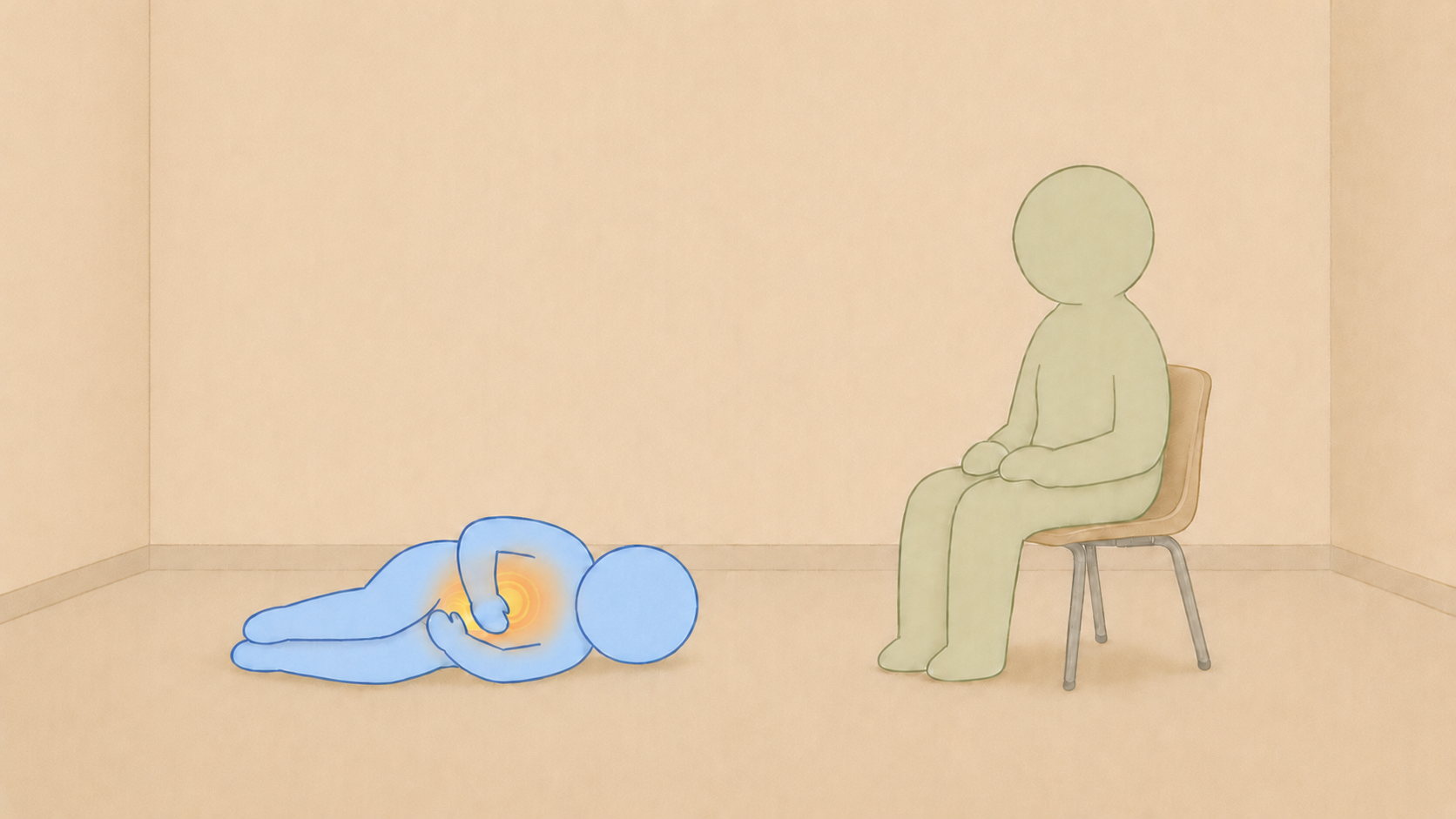
A blue faceless figure lies curled on the floor, holding its abdomen as overlapping orange body signals glow inside. A green figure sits nearby on a classroom chair in a small, windowless room, with a second empty chair in the corner.

About twenty years ago, I worked as an autism consultant in a large school district. This was during the era of time-out rooms, before schools widely discussed the harms of isolation and well before sensory rooms became common. A special education teacher brought a seven-year-old boy to the time-out room, and I met them there. … Read more
We Prevented the Distress. We Also Prevented the Practice.

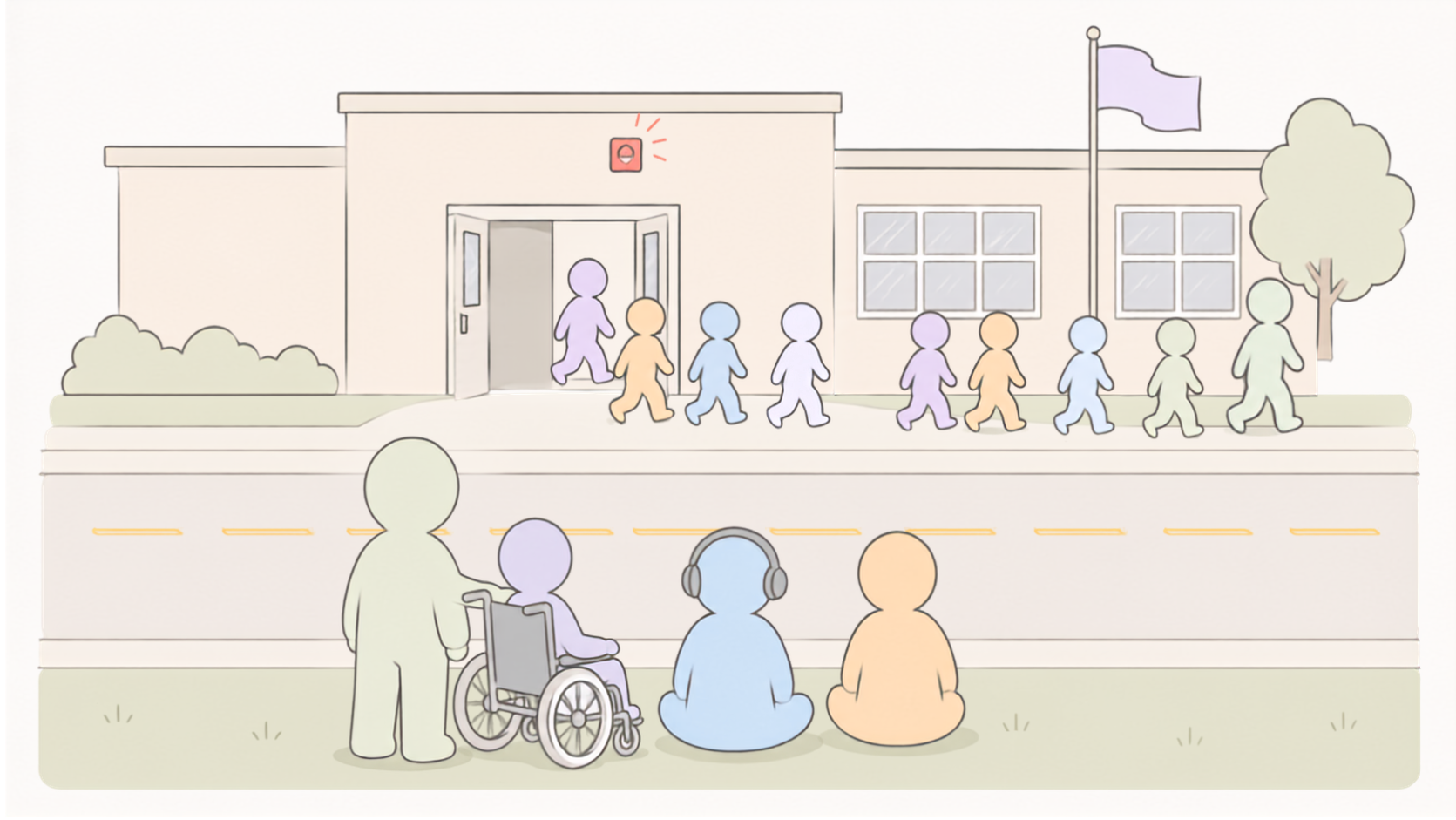
Four figures wait on the grass across the street from a school while an alarm sounds and the rest of the students file out the front doors. An adult stands behind a child using a wheelchair. Two other children sit on the ground, one wearing headphones.

Most schools hold a fire drill during the first month of the year. Administrators plan it. They know the date and the time. In theory, nobody else does, because part of the point is to practice what to do when an alarm is unexpected. That is often not how it goes. The administration wants the … Read more

Catching Change: Why We Notice and Mark Change

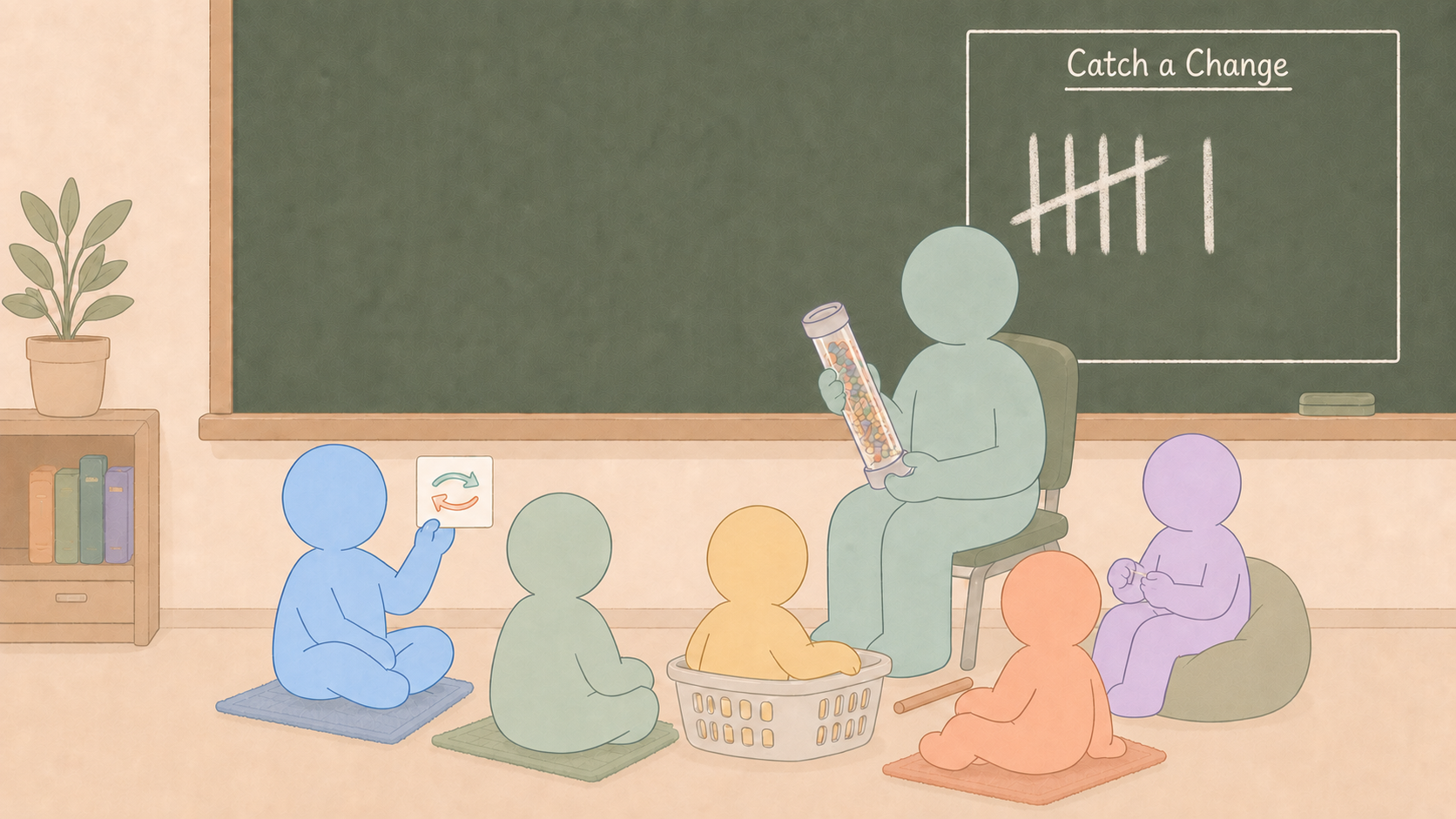
Illustrated classroom scene with children seated on carpet squares, a beanbag, and a laundry basket while an adult holds a rain stick beside a “Catch a Change” tally board. One child is holding a card with a change icon on it and another is signing change

When we talk about supporting autistic learners with change, we often focus on preparing them for what will happen next. Catching change starts somewhere slightly different. Years ago, I developed and ran a summer day camp for autistic campers, along with their siblings and friends. At the time, I did not have a word for … Read more

When the AAC Device Is Refused — and Ends Up in the Closet

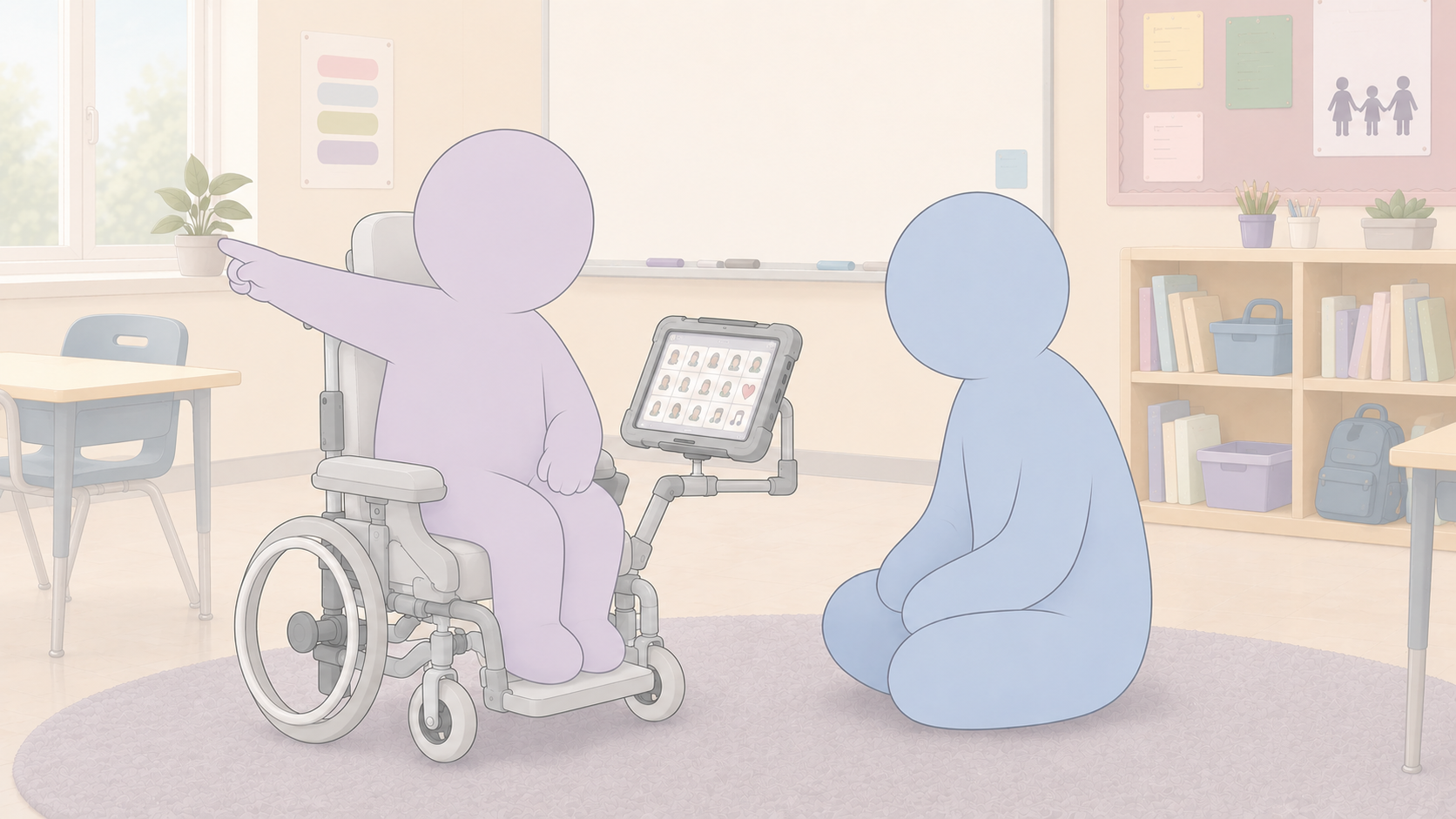
figure sitting in a wheelchair with an AAC device mounted but pointing away from the device. Another figure sitting nearby.

Over the years, I have heard parents, teachers, and therapists say: “We tried AAC, but she just threw it.”“I show him which picture to choose, but he pushes my hand away.”“He has the AAC device, but he says the same thing over and over and over.” These moments can be deeply discouraging. Families may have … Read more

Why Practical Neuro-Affirming Resources Are Still So Hard to Find

Person working on a laptop at home with worksheets scattered around

A teacher sits down on Sunday night to plan for an autistic student who has been struggling. She already understands that behavior is communication. She knows regulation comes before reasoning. She has moved away from reward charts and consequences and is trying to build support around safety, relationship, and autonomy. Then she opens her laptop … Read more

Intense Enthusiasms: What Happens When We Stop Trying to Shrink Them

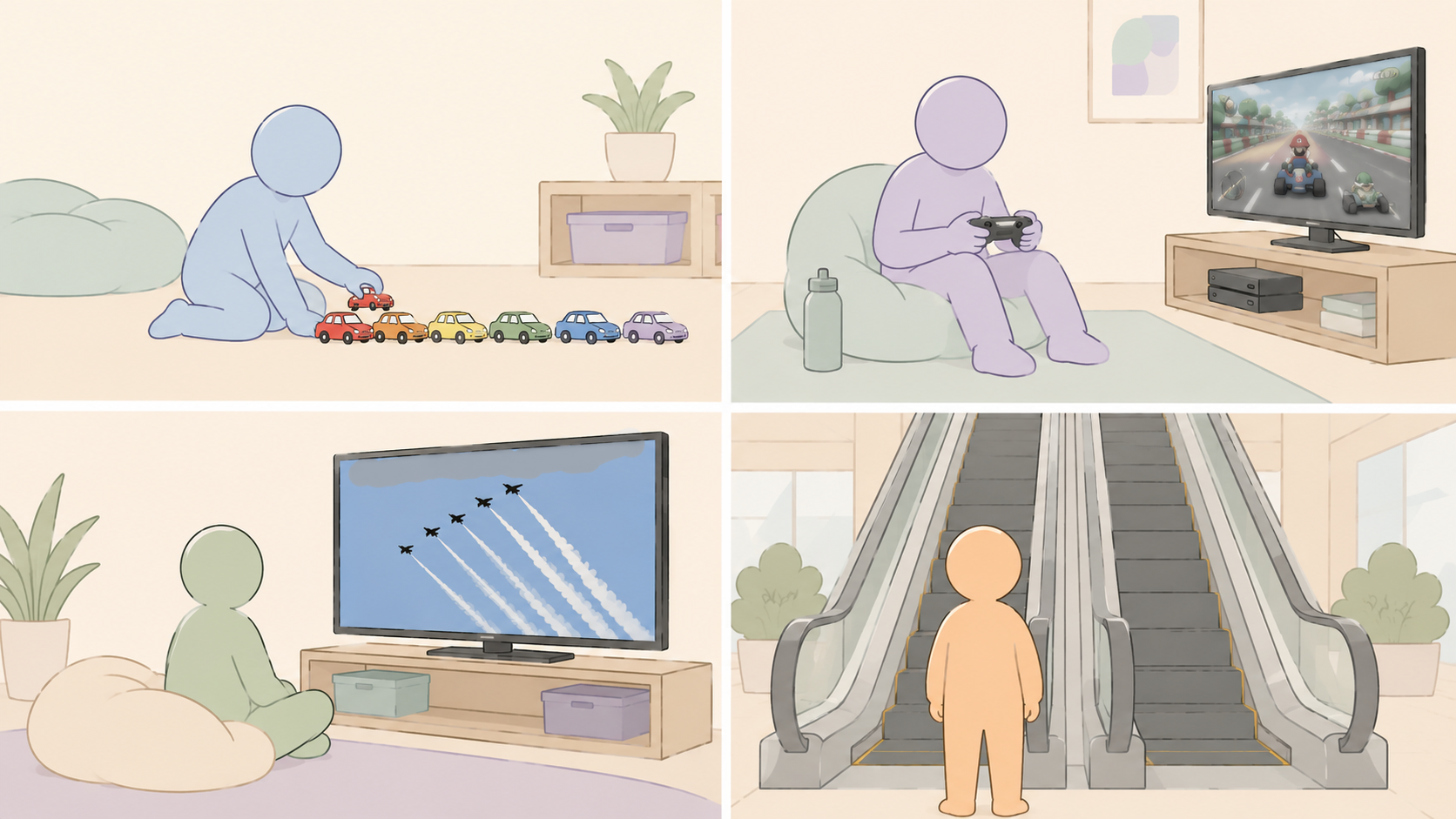
Four-panel illustration of figures absorbed in an intense enthusiasm: a blue figure lining up toy cars by color, a purple figure playing a kart-racing video game, a green figure watching jets in formation on TV, and an orange figure standing before an escalator.

A child returns to the same three songs. Talks about trains through every conversation. Memorizes television episodes, studies maps, focuses on video games, sorts figures, or watches the same short video again and again. Adults often notice the repetition first. We may worry that the interest is taking up too much space. We may try … Read more

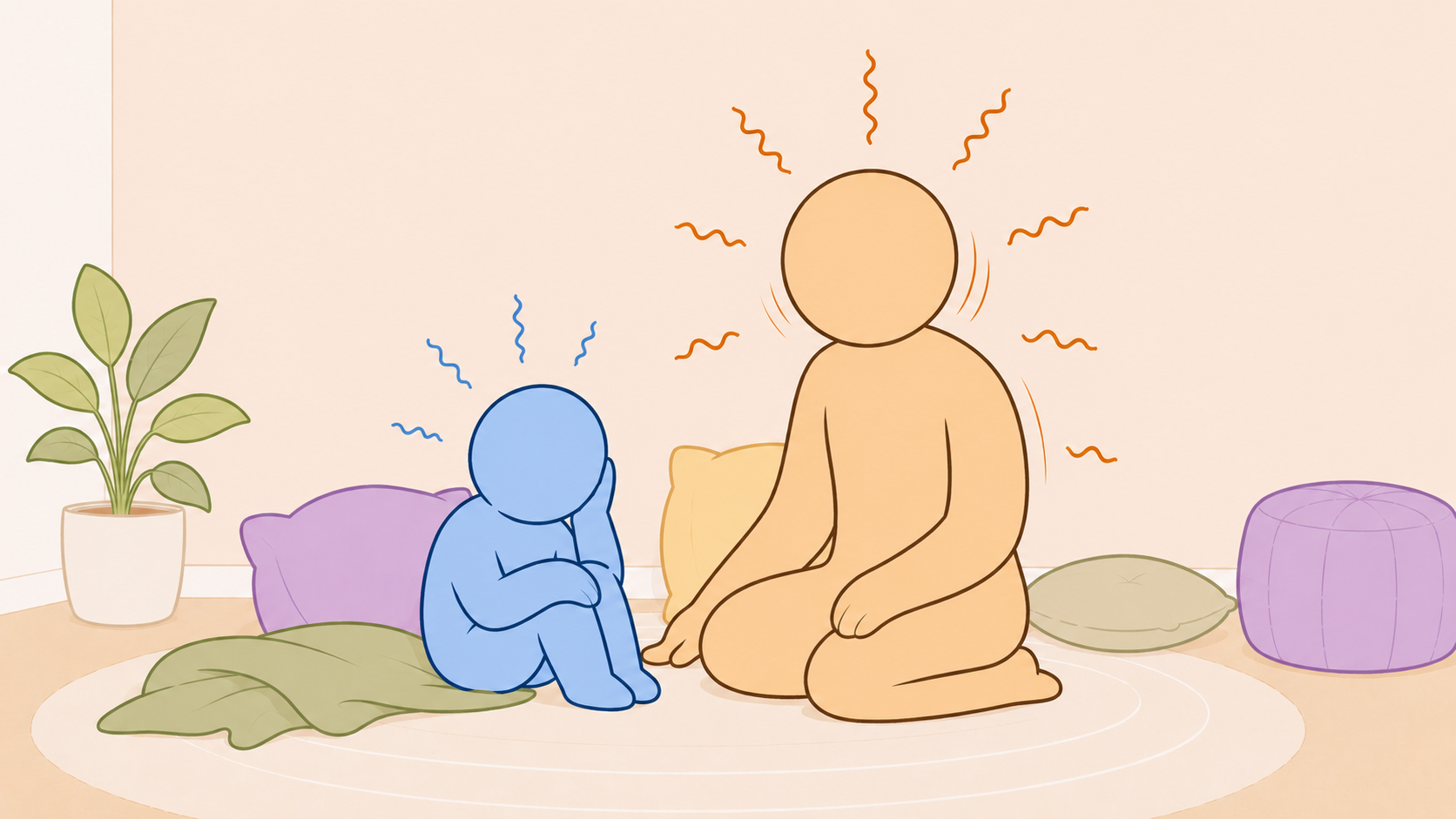
When Your Child Is Overwhelmed, Your Nervous System Is in the Room Too

Two figures sitting on the floor with pillows and a blanket. They both have lines radiating to suggest tension or nerves.

You have probably noticed this. Your child is melting down, shutting down, running, screaming, pacing, or completely frozen. You want to help. You start talking, redirecting, offering choices, explaining, trying to make it better. And sometimes, the more urgently you try to help, the harder the moment becomes. That does not mean you are doing … Read more

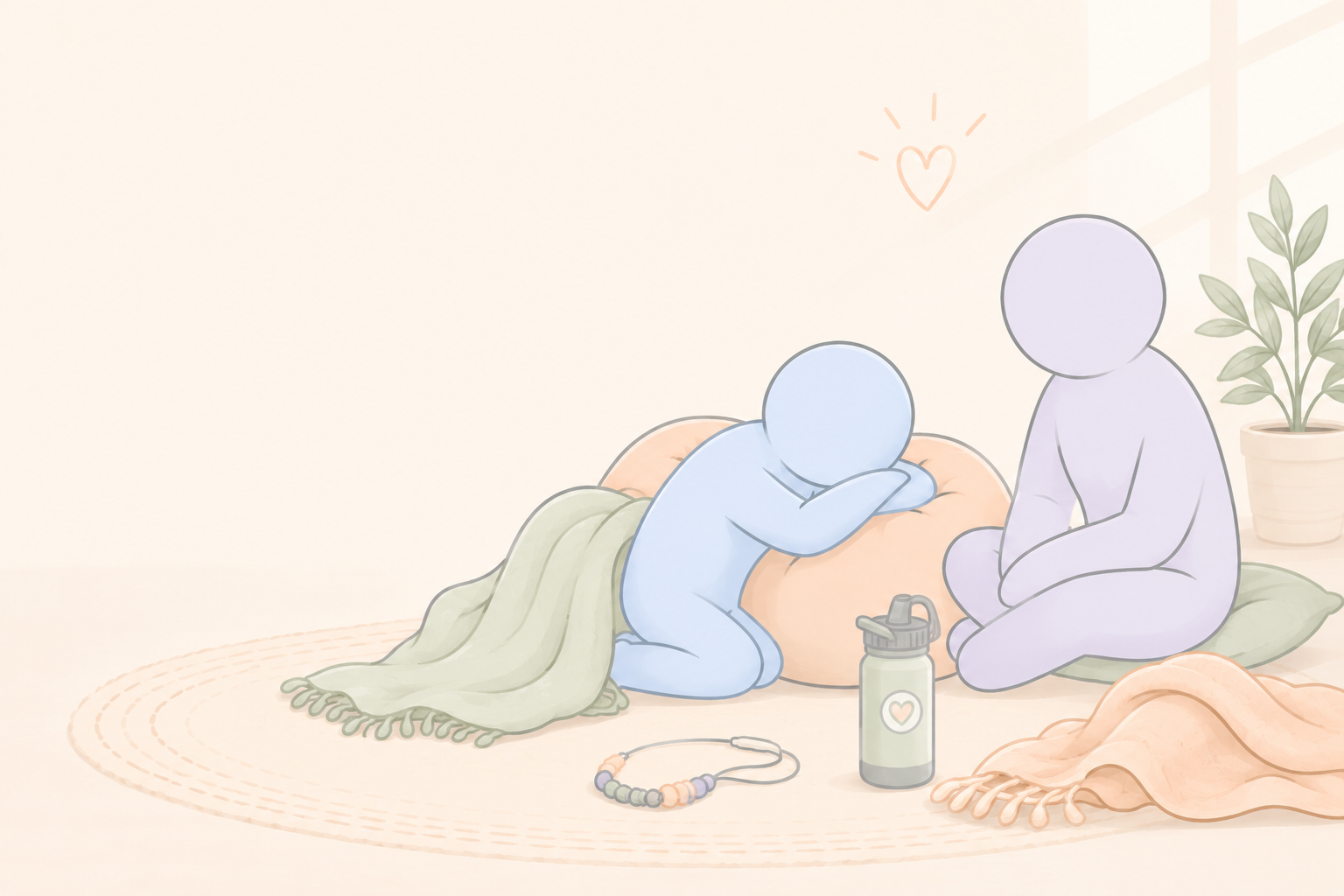
Meltdowns, Strong Energy, and Body Signals: Where Families Can Start

child lying on a beanbag chair with a blanket, beaded necklace and water bottle and parent sitting nearby.

You’re tired. Not the tired that sleep fixes. The tired that comes from bracing for the next hard moment. From trying to keep everyone safe. From wondering whether today will be the day your child throws something, hits, runs, crashes into you, chews through another shirt, or falls apart over something that seemed small from … Read more